-
 At least eight people died in Japan as heavy rains flooded roads and disrupted traffic while firefighters from Britain to France and Croatia struggled to contain blazes in Europe's fifth heatwave this summer
 -
Europe is sweltering through its fifth heatwave this summer. It has already lasted longer than a deadly heat wave that killed thousands across Europe in 2003.
-
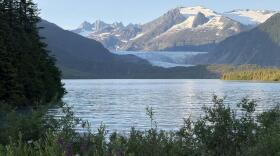 Officials in Alaska are warning that ice melt from a glacier high above the capital of Juneau could pose a threat to homes and businesses in the inundation zone.
 -
The Environmental Protection Agency spent millions of dollars cleaning up a massive residential lead superfund site in Omaha, Nebraska, starting in 1999.
-
 The Phoenix Species Project promises sustained support for dozens of localized efforts tailored to the needs of each species.
 -
The Environmental Protection Agency issued rules earlier this year for one controversial herbicide that can be prone to drifting and harming some other crops and trees.
-
Jackie, who was one half of the famous mated eagle pair Jackie and Shadow, died this week. The birds' eagle-cam livestream has fans across the world.
-
As a new school year approaches, student athletes across Texas are returning to the field for fall sports, even as punishing heat lingers. How are rules and practices changing?
-
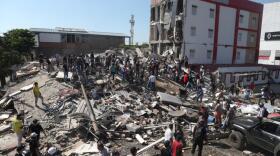 A powerful 7.4-magnitude earthquake shook dozens of cities and towns in Colombia on Monday.
 -
Vann Newkirk, senior editor at The Atlantic, loves butterflies, especially monarch butterflies. He sat down with NPR's Juana Summers to dig into a trip to Mexico that helped him explore his passion.

© 2026 KASU

Your Connection to Music, News, Arts and Views for Over 65 Years
Play Live Radio
Next Up:
0:00
0:00
Available On Air Stations


